

Implementation phase
A) Implementation of the Action Plan (2022-2023)
Implementation phase proceeded according to slightly modified Action Plan (here), where recommendations of EC (EC Consensus Report) were reflected. After 2 years of implementation we elaborated report on the realisation of the Action Plan for all actions (here), we prepared and analysed questionnairy on the implementation for our employees (here) and we submitted to EC an Internal Review according to the rules for HRAW (here).
- Organisational information
- Strengths and weaknesses of the current practice
- Actions
- Implementation/Embedding the HRS4R process
B) Implementation of the Revised Action Plan (2024-2026)
The second part of implementation will be realised according to the Revised Action Plan (here) and in agreement with new HR Strategy of the Institute (here).The OTM-R Strategy is described below and in the internal regulation "Recruitment and Selection of Researchers of the Institute of Biophysics of the CAS" (here).
- Organisational information
- Strengths and weaknesses of the current practice
- Actions
- Implementation/Embedding the HRS4R process
OTM-R Strategy
We have established an Open Recruitment Policy via the OTM-R document, which represents an internal guideline setting out clear OTM-R procedures and practices for all types of positions. We start with the advertisements of the scientific positions for all categories R1-R4 on the EURAXESS internet portal, web pages of our Institute, Facebook and in some cases on other platforms (mostly e-recruitment tools). The recruitment of researchers is open and transparent, the required documents are clearly described and reduced to minimum in order to keep the administrative burden as low as possible.
The selection is based on committees selected according to clear rules (see the Regulation). The composition reflects particular field of sciences as well as the requirements on the quality of human resources. In addition, the committees are selected to be gender-balanced. The members of the committees are sufficiently trained in the area of OTM-R by Ing. Robert Ulrich (member of the Steering Committee for HRAW) who is responsible also for advertisements at Euraxess. The guidelines and templates for advertising positions represent a part of the Regulation for recruitment. Open and transpared rules encourage women and external candidates to apply (most of the candidates are from abroad) including candidates from underrepresented groups. The number of candidates (in average 11 candidates in 2022-23) shows that the working conditions offered are sufficiently attractive, which is in line with OTM-R policy.
The assessment and selection is performed transparently with feedback to all candidates using the assessment of the merits of the candidates and excluding any discrimination (OTM-R), particular attention is paid to the gender balance. Each candidate is informed about the number of available positions and about the description of specific job positions through job advertisements. All candidates are informed about the outcome of the competition without undue delay after the competition is closed. The interviewees are provided with an adequated feedback to the interviews. The complaint mechanism consists in the possibility to write to the director of the Institute as well as to the whistleblower. Recruitment and selection of an employee takes place according to the OTM-R document, which is freely accessible to the general public via the website www.ibp.cz. Merit-based approach consisted in the selection of a suitable candidate for a particular job position, when the full range of the candidate's job history was taken into account. The benefit was assessed both qualitatively and quantitatively. Not only previous experience was evaluated, but the overall potential in a broader context. New positions are approved by the department leaders as well as by the Attestation Committee in order to evaluate their performance and provide some estimation whether most suitable researchers applied and were selected.
Candidates are not discriminated on the basis of their age, sex, worldview, beliefs, social and national origin, ethnicity, sexual orientation, language skills, disability, potential opinion, social or economic conditions, etc. to strengthen the principle of equality between men and women, between young and older workers, between workers living in different family groups with and without children, between foreign workers and workers with Czech citizenship. All scientists are informed in advance about the evaluation procedure of their work. In general, academic evaluation of science is based on the principle of open and transparent attitudes.
OTM-R procedure is supervised by the International Scientific Advisory Board (ISAB), an advisory body of the Director. ISAB is composed of high-ranking foreign scientists working in the fields of interest to the Institute. The composition of the ISAB is weighted according to the spectrum and size of the fields of research at our Institute. ISAB is nominated by department leaders, the Council of the Institute, and the Director; members of ISAB are approved by the Council and the Director. During the on-site visit, ISAB evaluates all teams according to their publications, presentations, and visits of their workplaces and provides to the Institute independent evaluation/appraisal of all departments and their leaders, nominations of best PhD students for director award and recommendations of the best outputs for national evaluation. ISAB provides recommendations on how to improve OTM-R strategy, and this part is discussed with ISAB members. OTM-R strategy is also analyzed and discussed with representatives of the Czech Academy of Sciences (CAS). These discussions provide quality control of the OTM-R procedure.
Gender Issues
Successful women of our Institute
prof. RNDr. Jana Kašpárková, PhD.
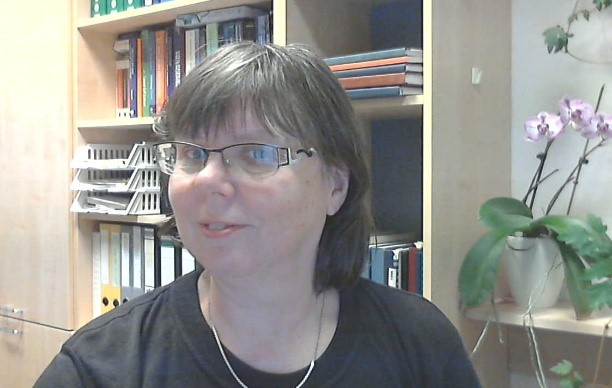
In 1993, she completed her studies in Biochemistry at the Faculty of Science of Masaryk University in Brno (MU). In 1996, she completed her doctoral studies in the field of biophysics at the Faculty of Science of MU and the Institute of Biophysics of the Academy of Sciences of the Czech Republic, receiving a Ph.D. degree. Since 1996, she has been working at the Institute of Biophysics of the Czech Academy of Sciences in Brno as a researcher. Since 2008, she has also been working at the Faculty of Science of Palacký University in Olomouc.
In 2004, she was appointed associate professor at the Faculty of Science of Masaryk University, and in 2010, at the suggestion of Palacký University, she became a professor in the field of biophysics. She has supervised master's and doctoral students and taught advanced semester courses in master's and doctoral study programs at the Faculties of Science of Masaryk University in Brno and Palacký University in Olomouc. She is a member of the faculty councils of the doctoral study programs in Physics at Masaryk University and Biophysics at Palacký University.
Jana Kašpárková is engaged in research into the mechanism of action of effective antitumor metallopharmaceuticals at the molecular and cellular level. She has been the principal investigator of several domestic projects, and between 2001-2010, she received two prestigious foreign grants awarded by the Howard Hughes Medical Institute (HHMI). She has participated in organizing several important international scientific symposia and has been a member of the evaluation panels of the Grant Agency of the Czech Republic. For the period 2022-2026, she is nominated as a representative of the Czech Republic in the steering committee of the action focused on preparing models for immunotherapy of cancer diseases within the framework of European cooperation in scientific and technical research (EC/ESF COST). She is the author or co-author of original scientific works published in renowned international professional journals and chapters in professional monographs. Her works have been cited more than 6000 times (excluding self-citations).
Judit Šponer, PhD.
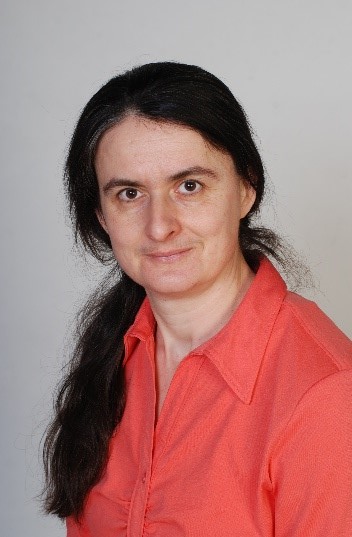
Judit Šponer, PhD. was born in Budapest, Hungary. She has graduated from Eötvös Loránd University, Budapest in 1993 as a chemist. After conducting her PhD. studies at the Structural Chemistry Research Group of the Hungarian Academy of Sciences in the topic of molecular structure determination using gas-phase electron diffraction, she earned her PhD degree from Budapest Technical University in 1996. From 1997 to 2001 she has been a junior scientist at the Catalysis Department of the J. Heyrovsky Institute in Prague, where she has been working on various problems related heterogeneous catalysis on zeolites. Starting from 2002 she is a senior scientist at the Department of Structure and Dynamics of Nucleic Acids at the Institute of Biophysics. Departing from theoretical analysis of key intermolecular interactions responsible for folding of RNA, her research focus has gradually shifted towards experimental problems related to the origin of life. Her studies on the role of formamide in the prebiotic synthesis of the building blocks of the first genetic molecules and on the non-enzymatic template-free polymerization of nucleotides are known not only for specialists working on the topic of the origins of life but also for the general public.
Since 2010 Judit Šponer has been the coordinator of several projects focusing on various aspects of the origin of life funded by the Czech Science Foundation, among which one of them was awarded by the “GAČR President’s award” in 2022. She has authored about 120 original publications in internationally recognized peer-reviewed journals and 5 book chapters which were cited about 5000 times (without autocitations).
prof. RNDr. Eva Bártová, DSc
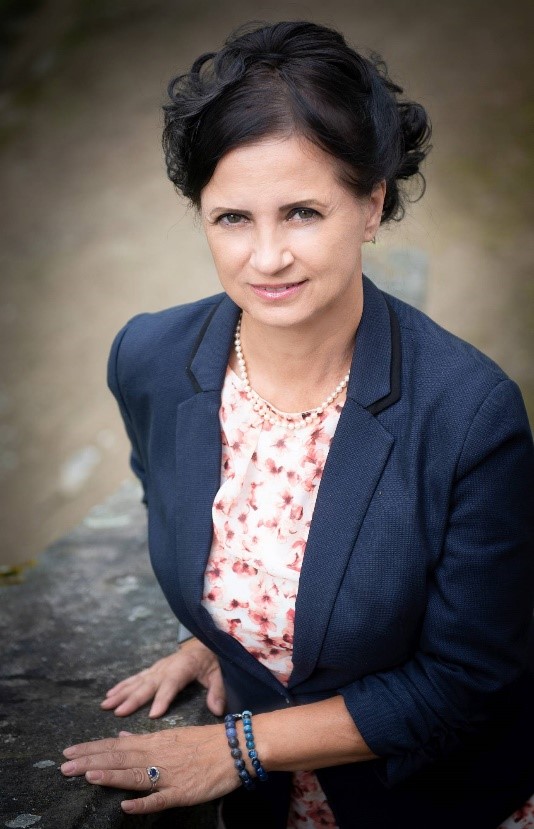
Eva Bártová graduated from the Masaryk University, Brno in 1991. In 1995, she received the Ph.D. (Department of Animal Physiology, Faculty of Science, Masaryk University and Department of Cytokinetics, Institute of Biophysics of the Academy of Sciences of the Czech Republic). In the years 1995–1996, she worked as an assistant at the Faculty of Medicine, Masaryk University, Brno, Department of Pathophysiology. Since 1997, she was employed and headed the Department of Molecular Cytology and Cytometry of the Institute of Biophysics of the Academy of Sciences of the Czech Republic, Brno. Since May 2017, she has been the director of the Institute of Biophysics of the Academy of Sciences of the Czech Republic, Brno. In 2010, Eva Bártová was appointed associate professor at the Faculty of Science at Masaryk University, and in 2024 she successfully passed the professorial process at Masaryk University. Eva Bártová led master's and doctoral students and teaches advanced semester courses in the master's and doctoral study programs at the Faculty of Science of Masaryk University in Brno. She is a member of the departmental councils of Masaryk University and since 2020 has been a member of EMBO.
Eva Bártová is interested in cellular and molecular biology, the study of chromatin structure and function, epigenetic processes with a focus on the histone code, and the analysis of DNA repair after UV damage and ionizing radiation.
Eva Bártová was the coordinator or investigator of many domestic and foreign projects, e.g.: EU project No. LSHG-CT-2003-503441, 2004-2007, 3D genome (coordinator Prof. Roel van Driel); EU, COST, No. TD09/05, 2009-2012. Epigenetics from Bench to Bedside; EU, Marie Curie project PIRSES-GA-2010-269156-LCS. 2011-2014. Study of protein dynamics in living cells after DNA damage (principal investigator); The Czech-Norwegian Research Program CZ09, project name: Nuclear architecture in the regulation of autophagy, DNA repair and gene expression (NuArch) No.: 7F14369 (principal investigator); The Czech-Norwegian Research Program CZ09, project name: Czech-Norwegian networking (CzeNoNet) No.: 7F16012 (principal researcher); EU, COST, grant: MC1406, 20015-2017. Epigenetic Chemical Biology (EPICHEM). She is the author or co-author of original scientific papers published in renowned international professional journals. Her work has been cited more than 2500 times.
prof. RNDr. Michaela Vorlíčková, DrSc.

Prof. RNDr. Michaela Vorlíčková, DrSc. studied Physics (biophysics) at the Faculty of Science of the MU (formerly UJEP) in Brno. After completing her master's degree, she was hired at the Institute of Biophysics of the AVČR, where she still works. Here she obtained the scientific degree CSc. and after the revolution DrSc. In 1992, she founded the Laboratory of CD Spectroscopy of Nucleic Acids at the IBP, where she educated a number of bachelor's, master's, and especially postgraduate students. In 2002, she completed her habilitation at the Faculty of Science of the MU in Brno, and in 2007 she was appointed a professor. She lectures special chapters on the biophysics of nucleic acids for master's and foreign PhD. students.Michaela Vorlíčková (MV) is a recognized scientific personality in the field of biophysical properties of DNA. Her results contributed to the current polymorphic view of this macromolecule. She was the first in the Czech Republic starting to use circular dichroic spectroscopy to systematic structural studies of nucleic acids. Due to its extraordinary sensitivity, technical ease of use and, above all, high informativeness, this method has become, next to NMR and crystallography, the most important and most frequently used method of studying nucleic acids and biomacromolecules in general, and dichrographs have become a standard equipment of molecular biology and biophysics laboratories. MV with her team wrote a number of basic papers on CD spectroscopy and nucleic acids, which are highly cited (e.g. an article of 2009 has >1300 citations).MV participated in pioneering research of various anomalous DNA arrangements different from the classical Watson-Crick model, such as left-handed DNA, parallel double helix, ordered single-strand helix and multi-stranded structures. Among the first in the world (Biophys J. 1997), she began to deal with DNA quadruplexes at the oligonucleotide level, which are currently intensively studied with regard to their biological importance.
MV was an investigator of 16 national grants (12PI, 4 coPI ), a project OPVVV (SYMBIT) financed by the ERDF, SCIEX (Scientific Exchange Programme between Switzerland and the New Member States of the EU), and a Fogarty International Research Collaboration, NIH, USA.
In 2015, MV was awarded by the Czech Academy of Sciences the G.J. Mendel Honorary Medal for Merits in Biological Sciences.
OP JAK – Returns to Research at the Institute of Biophysics of the Czech Academy of Sciences after a Career Break
Interviews with the applicants to the internal competition for "Return projects"
“Fortunately, I haven’t forgotten my children at school or kindergarten yet.”
INTERVIEW WITH THE APPLICANT OF THE INTERNAL RETURN PROJECT MARTINA TUNZEROVÁ
Martina Tunzerová works at the Department of Cell Biology and Epigenetics. After returning from parental leave, she focuses on studying DNA, RNA, and their epigenetic modifications in cells.
Why did you choose a scientific career? I never had a completely clear idea of what I wanted to do in life. I made decisions gradually, based on what made sense at the time. I enjoyed biology, so I started studying it. Scientific work appealed to me because it offers space for discovery and for trying to understand the world around us. Over time, I realized that I prefer the openness of science, constant learning, searching for connections, and exploring, rather than the idea of routine, clearly structured work.
Do you think women have it harder in science? I don’t think women generally have worse conditions in science just because they are women. But it can become more challenging when they have children and are the ones who stay on parental leave or take on most of the household responsibilities. That is still the common setup in most families. Women often spend several years outside the field and objectively have less space to fully focus on their careers.
Do you have previous experience with project preparation? Is the Return project your first major one? I don’t have much experience with project preparation yet. In the past, I only submitted a project to the internal Grant Agency of Charles University, which is intended for master’s and doctoral students.
You will lead a small team within the Return project. Are you worried about this role? I do have some concerns because I haven’t been in a leadership role before, and it’s not something that comes naturally to me. I also haven’t been in this group for very long. But I believe that the key to success is open communication and good relationships within the team, which we have.
What do you expect from the Return project? I expect the project to enable me to fully return to scientific work and reintegrate into the research environment. I will also gain valuable experience in project management. Thanks to the financial support for training activities, I plan to expand my methodological skills, which have advanced or are new to me since my parental leave.
Where do you see yourself in five years — professionally and personally? I’ve never been the type to plan the future in detail. I take things as they come and try to live a balanced and fulfilling life. At the moment, I’m happy, and I hope I’ll be able to say the same in five years.
How many years of parental leave did you take before returning to work? I was on parental leave for six years.
What is the hardest part of returning to work? The hardest part so far is switching between work and family mode. When leaving work, I often need a moment to gather my thoughts and remember everything I still need to do — who to pick up and what to arrange. At the same time, I sometimes find myself thinking about work on the way home and then suddenly realize I’m not sure where I’m actually going. Fortunately, I haven’t forgotten my children at school or kindergarten yet.
"I'm really looking forward to returning to work fully and hopefully Návraty will help me get there"
INTERVIEW WITH THE APPLICANT OF THE INTERNAL RETURN PROJECT EVA VOJTKOVÁ
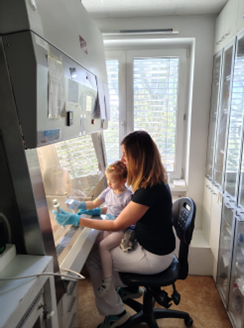
Eva Vojtková works at the Department of Biophysics of the Immune System. In her proposed project, she focuses on supporting anti-tumor immunity in melanoma through extracellular vesicles and targeted modulation of their content.
What led you to a scientific career? Since childhood, I’ve been fascinated by nature and animals and had a strong desire to discover new things. When choosing my field of study, I eventually decided on General Biology at Masaryk University. Although it wasn’t my original plan, I gradually realized that I really enjoy laboratory work and research itself. Science is creative, full of challenges, and at the same time extremely fulfilling.
How do you perceive the position of women in science? I believe women still have it somewhat more difficult in the scientific environment. The positive thing is that the situation is gradually improving — for example, thanks to better recognition of maternity and parental leave or return grants. Still, there is room for further improvement.
Do you have experience with project preparation? The Return project is my first larger project as a principal investigator. However, I have participated in project preparation before, and last year I applied for a return grant from GAČR.
Part of the project involves leading a team. How do you feel about that? I do have some concerns, but I see them as a natural part of a new challenge. At the same time, I’m glad to have an experienced mentor, Gabriela Ambrožová, whom I can turn to. Her experience with team leadership is a great support for me.
What do you expect from the Return project? Above all, the opportunity to fully return to the work I enjoy, develop my ideas, and gain experience in leading a team. I would like us to achieve concrete and meaningful results.
Where do you see yourself in five years? It’s difficult to predict in science because research depends heavily on funding. Still, I would like to stay in research. In my personal life, I wish to be happy, content, and surrounded by a supportive family.
How long were you on parental leave? I’m returning to full-time work after three years, during which I worked at least partially.
What will be the most challenging part of returning? The biggest challenge will be balancing work responsibilities with family life. Until now, I had a very flexible schedule with my daughter, so the beginning will probably be demanding. But I believe everything will settle, and I’ll soon get back into full working rhythm. I’m really looking forward to returning to work.
“For women, some phases of a scientific career can be more complicated — especially when family life comes into play.”
INTERVIEW WITH THE APPLICANT OF THE INTERNAL RETURN PROJECT PETRA KUHROVÁ
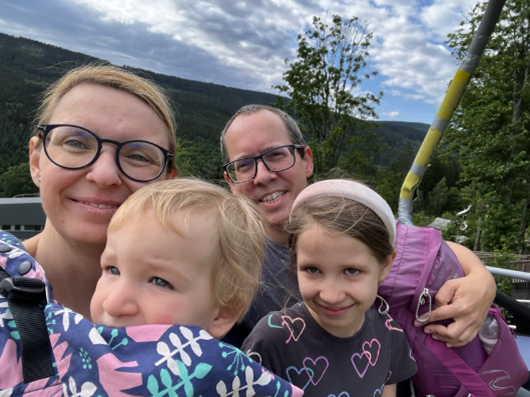
Petra Kuhrová works at the Department of Structure and Dynamics of Nucleic Acids. She uses computer simulations to describe the behavior of nucleic acids and biomolecular systems, including more complex structures such as lipid nanoparticles.
Why did you choose a scientific career? There wasn’t a single moment when I decided. I gradually started enjoying solving problems that don’t have simple answers. What’s interesting about my field is that it combines physics, chemistry, and biology, and you have to piece together the bigger picture from different parts.
Do women have it harder in science? I think it depends a lot on the specific environment. I’ve been very lucky with the people around me, so my personal experience is positive. But I also see that, in general, some phases of a scientific career can be more complicated for women, especially when family life becomes part of the equation.
Do you have previous experience with project preparation? Is the Return project your first major one? Yes, I have participated in project preparation as a member of research teams. You get to see how projects are built, how goals are formulated, and what is needed to make a project work. The Return project is my first opportunity to build a project myself and take full responsibility for it.
Are you worried about leading a scientific team? I would say I have respect for it. On the other hand, I’ve been working with these people for a long time, so it’s not an entirely new situation. I see it as a natural step forward.
What do you expect from the Return project? Mainly the opportunity to focus on my own research questions and develop them systematically. It’s also a chance to gain experience in leading a project as a whole — not only scientifically but also organizationally.
Where do you see yourself in five years (professionally and personally)? Professionally, I would like to move toward greater independence and have my own stable research focus. Not necessarily a large group, but a functioning team and projects that build on each other. Personally, I want to maintain a balance between work and family, which is very important to me.
How many years of parental leave did you take before returning? I was on maternity and parental leave in two periods, 2018–2020 and 2023–2025. However, I remained at least partially involved in research the whole time, so it’s not a complete return “from zero.”
What is the hardest part of returning? Probably time management. Science tends to take up as much space as you give it, and balancing that with family life is not trivial. On the other hand, I see the return positively — as an opportunity to focus more on work again.
"I see leading a small scientific team as an opportunity to gain new experience"
INTERVIEW WITH THE APPLICANT OF THE INTERNAL RETURN PROJECT ZUZANA SOLDÁNOVÁ
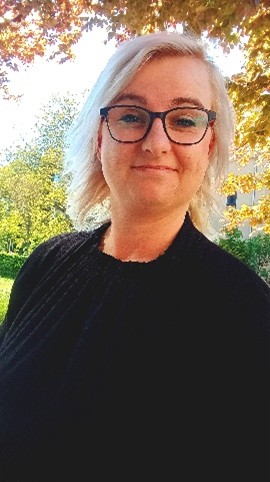
Zuzana Soldánová is preparing her project at the Department of Biophysical Chemistry and Molecular Oncology.
Why did you choose a scientific career path? I became involved in science during my studies at the University of Veterinary and Pharmaceutical Sciences Brno. Thanks to my thesis supervisor, I had the opportunity to work at the Institute of Biophysics of the Czech Academy of Sciences, at the Department of Biophysical Chemistry and Molecular Oncology. I became fascinated by research work, and over time it became the direction I want to pursue professionally.
Do you think women have it harder in science? I think it is individual, but women may face greater challenges, especially in connection with parenthood and career interruptions. However, the situation is gradually improving, also thanks to programmes that support returns after career breaks.
Do you have previous experience with project preparation? Is Návraty your first major project? Yes, I have participated as a principal investigator and co‑investigator on projects within the internal mobility, grant, and educational agency of VFU Brno. The Návraty project is my first opportunity to lead my own larger project, which I see as an important step forward in my professional career.
As part of the Návraty project, you will also lead a small team. Are you worried about leading a scientific team? I see leading a small scientific team as an opportunity to gain new experience. I look forward to working with colleagues, moving the project forward together, and discovering new results.
What do you expect from the Návraty project? For me, the project represents a great opportunity to fully return to scientific work, build on previous research, and further develop my own research topic.
What scientific problem are you focusing on? In my research, I focus on the electrochemistry of selected G4 ligands and their interaction with DNA. I would also like to draw on my previous education and concentrate on ligands tested or used in clinical practice. It is a topic with both scientific and practical relevance, which is very motivating for me.
Where do you see yourself in five years professionally and personally? I would like to continue developing my research topic and participate in preparing other interesting projects, ideally also in international collaboration. In my personal life, maintaining a balance between work and family is important to me.
After how many years of maternity/parental leave are you returning to work? I am returning to work full‑time after five years. Even during parental leave, I stayed in touch with the field, especially through collaboration on publications, which allows for a smooth return.
What is the most difficult part of returning to work for you? Or what do you expect will be the most difficult? The biggest challenge will be balancing work and family life and returning to a full working pace. At the same time, I am very much looking forward to returning and see it as a new chapter.
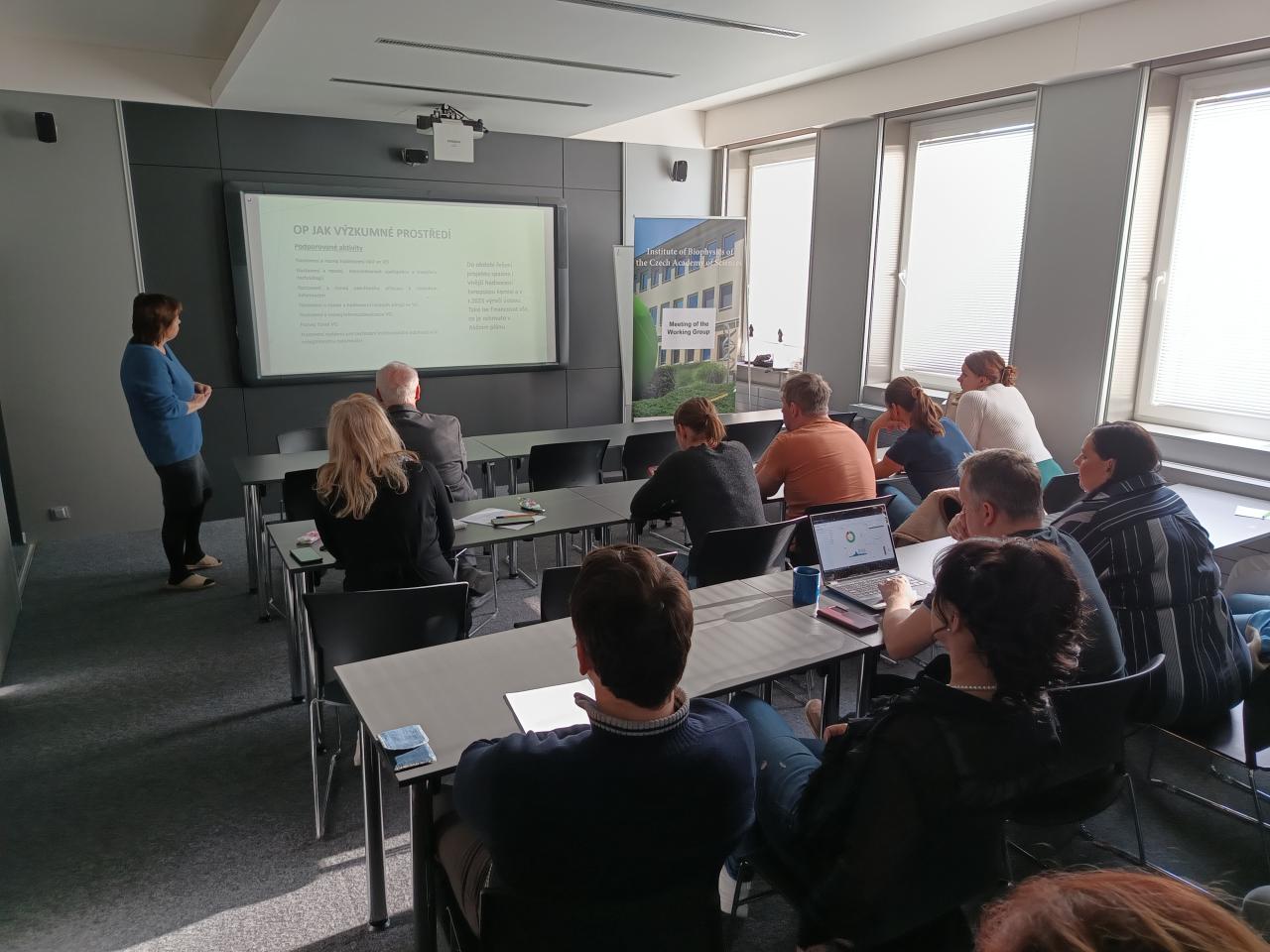
Meetings of the Working Group (WG) and Steering Committee (SC)
- December 15, 2021 (.pdf) Working Group
- February 24, 2022 (.pdf) Working Group
- June 15, 2022 (.pdf) Working Group
- June 15, 2022 (.pdf) Steering Committee
- November 3, 2022 (.pdf) Working group
- November 3, 2022 (.pdf) Steering Committee
- March 30, 2023 (.pdf) Working Group
- October 4, 2023 (.pdf) Working Group
- October 4, 2023 (.pdf) Steering Committee
- January 30, 2024 (.pdf) Working Group (see here)
- January 30, 2024 (.pdf) Steering Committee
- June 27, 2024 (.pdf) Working Group
- June 27, 2024 (.pdf) Steering Committee
- October 30, 2024 (.pdf) Working Group
- February 18, 2025 (.pdf) Working Group
- February 18, 2025 (.pdf) Steering Committee
- June 12, 2025 (.pdf) Working Group
- September 10, 2025 (.pdf) Working Group (the questionairy)
- September 10, 2025 (.pdf) Steering Committee
- February 4, 2026 (.pdf) Working Group (.ppt)
- February 4, 2026 (.pdf) Steering Committe
- June 29, 2026 (.pdf) Working Group
- June 29, 2026 (.pdf) Steering Committee
Questionnaires
Questionnaire (initial), March 30, 2023 (Questions and Answers), Analysis of the Questionnaire (Survey)
Research environment (2025), here
Returns (questionnaire, 2025), here
Further education (questionnaire, 2026), here
Open science (questionnaire, 2026), here
Questionnaire for new Action plan (2026-2029), here
List of Courses and Lectures (2022-2026)
January 26, 2022, Stanislav Kozubek: Introduction to Science Evaluation
February 17, 2022, Vladky Hagenova: Rhetoric (the ability of cultivated speech)
March 8-10, 2022, Michal Svoboda: Biostatistics
April 12, 2022, Petra Fedorova: ERC grants
January, 2021-June, 2022 weekly, Vogel Radek, Škarková Eva LeBlanc Michele: Language courses
May 17, 2022, Vit Zeleny: Computer graphics
June 22, 2022, Pavla Špondrová: Gender in leadership
February 22, 2023, Nada Konickova, Monika Vrajova, Lyudmyla Tysyachna: Horizon Europe, MCSF and ERC grants
March 28, 2023, Zdenka Brazdova: Management and Leadership in a nutshell
March 30-31, 2023, Celine Carret: Writing of scientific publication
April 5, 2023, Pavla Špondrová: Equality between women and men
May 18, 2023, Stanislav Kozubek: Excel 1
June 28, 2023, David Kral: Seminar on Cybersecurity
September 19 and 22, 2023, Antonin Tomas: Course on physiotherapy I
September 27, 2023, Sandra Krahl: Applying design principles to schematic figures
October 23, 2023, Stanislav Kozubek: Excel 1
February 14, 2024, Jiri Ctvrtnicek: Course on the first aid I
February 22, 2024, David Král: Seminar on Cybersecurity
February 28, 2024, Jiři Ctvrtnicek: Course on the first aid II
March 5, 2024, Antonin Tomas: Course on physiotherapy II
April 8, 2024, Martin Svoboda, Course on AI
May 22, 2024, Pavla Špondrová, Course on Gender Case Studies
April 24, 2025, Vlastimil Pitrocha, Course on Self Defense
May 22, 2025, Petr Šťourač, Visit to the Simulation center of the Faculty of Medicine
October 1, 2025, Stanislav Kozubek, Course on Biostatistics I
October 20, 2025, Stanislav Kozubek, Course on Biostatistics II
November 6, 2025, Stanislav Kozubek, Course on Biostatistics IIII
March 3, 2026, Vojtěch Novohradský, Visit to Thermo Fisher Scientific, Brno
Time schedule of the Revised Action Plan (2024-2026)
- September 25,2026 Night of Scientists (7.)
- September 25,2026 Behind the Decision: A Discussion with Editors from Nature Communications & The EMBO Journal ()
- September 8,2026 Post-SYMBIT seminar (6.)
- August 3-7,2026 Summer School for children of IBP employees — II. Turnus 2026 (12.7)
- July 20–24, 2026 Summer School for children of IBP employees — I. Turnus 2026 (12.6)
- May 29, 2026 Children's Day 2026 (12.5)
- March 3, 2026 Visit TermoFisher Scientific (5.12)
- February 15, 2026 Announcement of the 1st Call of the Internal Grant Competition "Returns" (12.4, 14.3)
- January 28, 2026 Lecture on "From Viral Vectors to CRISPR: Building Smart Cell Models for Disease and Therapy" (6.26)
- January 20, 2026 Lecture on "Integrative Physiology of Gnotobionts: Science and Technology" (6.25)
- 2026-30 June 2029 OP JAK project to support HRAW activities entitled "Return to research at the Institute of Biophysics of the Academy of Sciences of the Czech Republic after a career break CZ.02.01.01/00/24_037/0013767 supported by the Jan Amos Comenius Programme." (14.2)
- November 20, 2025 Lecture on "The secret life of prey-specialized spiders" (6.24)
- November 19, 2025 Lecture on "The Replication Initiation Factor DONSON: Function, Structure, and Regulation" (6.23)
- November 7, 2025 Career day in IBP 2025 (6.22)
- November 6, 2025 Biostatistics III (5.11)
- November 5, 2025 Day of the open door 2025 (7.7)
- October 20, 225 Biostatistics II (5.10)
- October 1-31, 2025 Support to foreign study (1.7)
- October 3, 2025 Post-SYMBIT seminar (6.21)
- October 1, 2025 Biostatistics (5.9)
- September 26,2025 Night of Scientists (7.6)
- September 25,2025 PhD Welcome Day (6.20)
- August 28, 2025 Attestation of Coulon Rémi Joris Raphael (4.15)
- July 28-August 1, 2025 Summer school of biophysical sciences for children (10.3)
- July 13-20, 2025 Scientific Fair 2025 (7.5)
- June 24, 2025 Attestation of Jakub Červinka (4.14)
- June 18, 2025 Lectures on "Celebration of the 70th anniversary of the founding of the institute" (6.19)
- June 17, 2025 IBP happening (6.18)
- June 16, 2025 Post-SYMBIT seminar (6.17)
- June 4, 2025 "Methodology of the Evaluation of Research Organizations, M2017+/2025+" (2.4)
- May 30, 2025 Children's Day 2025 (12.3)
- May 22, 2025 Visit to the Simulation center of the Faculty of Medicine (5.8)
- May 16, 2025 Attestation of Daniel Renčiuk (4.13)
- May 16, 2025 Attestation of Vojtěch Novohradský (4.12)
- May 16, 2025 Attestation of Eva Sýkorová(4.11)
- April 24, 2025 Post-SYMBIT seminar (6.16)
- April 24, 2025 Course on Self Defense (5.7)
- April 4, 2025 Strengthening of grant applications (8.4)
- March 31, 2025 Attestation of Jan Víteček (4.10)
- February 26, 2025 Attestation of Tomas Brom (4.9)
- January 17, 2025 Support of young researchers by Internal Support Research Program (8.3)
- January 16, 2025 Post-SYMBIT seminar (6.15)
- 2025 Support of mobility in 2025 (1.5, 1.6)
- December 19, 2024 Attestation of Vojktěch Novohradský (4.8)
- December 11, 2024 Attestation of Jana Perečková (4.7)
- December 11, 2024 Attestation of Lucie Kajan Grodecká (4.6)
- December 6, 2024 Senior day
- December 4, 2024 Attestation of Jana Sochorová (4.5)
- December 3, 2024 Lecture dr. Doležel (6.14)
- Decembr 2024 The best PhD student award, Application Award, Internal cooperation Award, Methodology Award and The scientific paper of the year (3.2)
- November 20, 2024 Post-SYMBIT seminar (6.13)
- November 15, 2024 Career day (6.12)
- November 6, 2024 Open Day (7.4)
- October 23-24, 2024 Meeting of the Czech Biophysical Association (6.11)
- September 27, 2024 Night of Scientists (7.3)
- September 26, 2024 Machines and methods meeting: Lecture on "Critical thinking in the field of research" (6.10)
- September 25, 2024 Attestation of Kateřina Večeřová (4.4)
- September 25, 2024 Attestation of Ing. Marcel Hubinský (4.3)
- September 25, 2024 Attestation of Ing. Hesko Ondrej (4.2)
- September 11-12, 2024 3D CELL CULTURE (6.9)
- September 11, 2024 Volleyball tournament
- September 4, 2024 Post-SYMBIT seminar (6.8)
- September 2024 Evaluation of the departments by informed peer review using ISAB (2.3, 9.1)
- August 22-23, 2024 ScanR workshop (6.7)
- August 12-16, 2024 Summer school of biophysical sciences for children II (10.2)
- August 2024 Employee Survey on research environment (13.1)
- July 30, 2024 Lecture Priv.-Doz. Dr. Klara Janjić (6.6)
- July 15-19, 2024 Summer school of biophysical sciences for children I (10.1)
- July 14-21, 2024 Scientific Fair 2024, IBP stand at the exhibition, Lecture of Eduard Kejnovsky (7.2)
- July 8, 2024 Lecture Prof. Nicholas Stephanopoulos (6.5)
- June 27, 2024 Lecture Prof. Kateryna Makova (6.4)
- June 21, 2024 Machines and methods meeting (6.3)
- June 11, 2024 Children's Day (12.2)
- May 22, 2024 Course on Gender Case Studies (5.6)
- April 8, 2024 Course on AI (5.5)
- April 4, 2024 Web page "Successful Women" (12.1)
- April 3, 2024 Strengthening of grant applications (8.2)
- March 21, 2024 Seminar on Cybersecurity (5.2)
- March 14, 2024 Lecture Assoc. Prof. Kumar Somyajit (6.2)
- March 6, 2024 Seminar on Cybersecurity (5.2)
- March 5, 2024 Course on physiotherapy (5.4)
- February 28, 2024 Course on the first aid II (5.3)
- February 22, 2024 Seminar on Cybersecurity (5.2)
- February 20, 2024 Post-SYMBIT seminar (6.1)
- February 14,2024 Course on the first aid I (5.1)
- February 14,2024 Participation at the conference "Implementation of the Methodology M17+" (2.2)
- January 31, 2024 Attestation of Mgr. Veronika Skočková (4.1)
- January 16, 2024 Hana Polasek-Sedlackova received a prestigious EMBO Installation Grant (8.1)
- January 2,2024 Letter of Acknowledgement of the Czech Academy of Sciences (3.1)
- January 2, 2024 Evaluation of the departments of IBP for 2023 (2.1)
- January 1, 2024 - May 7, 2024 Four-month stay of PhD student (1.24)
- 2024 Support of mobility in 2024 (1.1, 1.2, 1.3, 1.4)
Time schedule of the Action Plan (2022-2023)
- December 15, 2023 Award for internationalization in 2023 (5.13)
- December 15, 2023 Awards for the best methodology in 2023 (5.12)
- December 15, 2023 Awards for the best publication prepared in international collaboration in 2023 (5.11)
- December 15, 2023 Awards for the collaboration among departments of IBP CAS in 2023 (5.10)
- December 15, 2023 Award for the best application in 2023 (5.9)
- December 15, 2023 Awards for the best publication in 2023 (5.8)
- December 4, 2023 Strengthening of grant applications (results of evaluation) (12.8)
- November 27, 2023 IBP meeting on Machines and Methods (10.30)
- November 27, 2023 Postdoctoral fellow - Telomere biology of Trypanosomatids, DNA lesions in the genome of Arabidopsis thaliana defective in DNA repair and nucleosome assembly (2.20)
- November 27, 2023 Postdoctoral fellow - bioinformatician (2.19)
- November 24, 2023 Senior Day (7.9)
- November 17, 2023 A new paper from the Department of Biophysics of the Immune System (11.24)
- November 15, 2023 Post-SYMBIT seminar (10.29)
- November 14, 2023 Director's Collegium (10.28)
- November 11, 2023 The Department of Structure and Dynamics of Nucleonic Acids (11.23)
- November 9, 2023 IBP CAREER DAY: "Per Aspera ad Astra" (10.27)
- November 8, 2023 Open Day (11.21)
- November 1-2, 2023 23rd Joint Meeting of Biophysical Chemists and Electrochemists (10.26)
- October 23, 2023 Excel 1 (8.16)
- October 6, 2023 - November 6, 2023 One-month stay of PhD student (1.23)
- October 6, 2023 - November 6, 2023 One-month stay of PhD student (1.22)
- October 5, 2023 New doctoral student in molecular biophysics and pharmacology (2.18)
- October 2, 2023 Martin Falk one of the co-authors of the new RADIOBIOLOGY TEXTBOOK (11.22)
- September 27, 2023 EMBO - Applying design principles to schematic figures (8.15)
- September 25, 2023 New PhD position in biology/chemistry (2.17)
- September 22, 2023 Course on physiotherapy 1 (8.14)
- September 19, 2023 Course on physiotherapy 1 (8.14)
- September 14, 2023 Post-SYMBIT seminar (10.25)
- September 11-13, 2023 Conference on "Plant Chromosome Biology" (10.24)
- September 11, 2023 - October 11, 2023 One-month stay of PhD student (1.21)
- September 2, 2023 - November 2, 2023 Two-months stay of PhD student (1.20)
- August 31, 2023 New postdoc position (2.15)
- August 30, 2023 New postdoc position (2.16)
- August 14-18, 2023 Summer school of biophysical sciences for children (14.4)
- July 25, 2023 New PhD position (2.14)
- July 21-22, 2023 Mendel Festival 2023 (11.19)
- July 10-14, 2023 Summer school of biophysical sciences for children (14.3)
- July 12, 2023 Post-SYMBIT seminar (10.23)
- July 4, 2023 G-quadruplexses in the evolution of hepatitis B virus (11.18)
- June 29, 2023 Banning plant DNA editing is evolutionary suicide (11.17)
- June 29, 2023 Improved positions of employees (6.14)
- June 28, 2023 Seminar on Cybersecurity (8.13)
- June 26, 2023 Variability of Inverted Repeats in All Available Genomes of Bacteria (11.16)
- June 21, 2023 Director's Collegium (10.22)
- June 15, 2023 National evaluation of our Institute in 2023 (13.3)
- June 15, 2023 Improved positions of employees (6.13)
- June 8-10, 2023 Fair of Science 2023 (11.15)
- June 7-9, 2023 Meeting of the Czech Biophysical Association (10.21)
- June 2, 2023 Children's Day (9.3)
- May 31, 2023 Improved positions of employees (6.12)
- May 25, 2023 Cancer cells use self-inflicted DNA breaks to evade growth limits imposed by genotoxic stress (10.20)
- May 25, 2023 New postdoc position in cell biology (2.13)
- May 24, 2023 Merck seminar "Antibody zone" (10.19)
- May 18, 2023 Excel 1 (most common use of Microsoft Excel) (8.12)
- May 11, 2023 Water and electrochemistry (10.18)
- May 5, 2023 Garden party of empoyees of IBP (7.8)
- April 3, 2023 - May 7, 2023 One-month stay of PhD student (1.19)
- April 5, 2023 Equality between women and men (8.11)
- April 4 - May 5, 2023 Mysterious underwater world through the eyes of creative photography (11.14)
- April 3, 2023 Strengthening of grant applications (12.7)
- March 31, 2023 New Ph.D. position (2.12)
- March 30-31, 2023 Writing of scientific publication (8.10)
- March 28, 2023 Management and Leadership in a nutshell (8.9)
- March 23, 2023 - May 30, 2023 Two-months stay of PhD student (1.18)
- March 23, 2023 IBP meeting on Machines and Methods (10.17)
- March 15, 2023 New Ph.D. position (2.11)
- March 14, 2023 - June 16, 2023 Three-months stay of PhD student (1.17)
- March 13, 2023 Improved positions of employees (6.11)
- March 2, 2023 Post-SYMBIT seminar (10.16)
- February 27, 2023 - March 31, 2023 One-months stay of PhD student (1.16)
- February 22, 2023 Horizon Europe, MCSF, and ERC grants (8.8)
- February 20, 2023 Translation of the "Internal regulations on increasing institutional resilience at the IBP" (3.7)
- February 20, 2023 Translation of the "Crisis Management Plan of the Institute of Biophysics" (3.6)
- January 27, 2023 Bibliometric evaluation of departments (4.4)
- January 20, 2023 Support of young researchers by Internal Support Research Program (12.6)
- January 20, 2023 Director's Collegium (10.15)
- January 20, 2023 Support of young researchers mobility by Internal Mobility Support Research Program (1.15)
- January 17, 2023 Regular information on Institutional events on Facebook (11.20)
- January 12, 2023 Research emeritus for Dr. J. Široký (7.7)
- January 1, 2023 New postdoc position (2.9)
- November 25, 2022 Cooperation Award in 2022 obtained the research collective (5.6)
- November 25, 2022 Award for internationalization in 2022 (5.5)
- November 25, 2022 Award for the best application in 2022 (5.4)
- November 25, 2022 Award for young scientists in 2022 (5.3)
- November 25, 2022 Awards for the best publications in 2022 (5.2)
- November 12, 2022 Report on the translation of the HRAW (Report for 2022)
- November 11, 2022 IBP CAREER DAY: "Per Aspera ad Astra" (10.14)
- November 10 - 11, 2022 Mgr. Denis Šubert - Liverpoole, UK (1.5)
- Novemer 7, 2022 Cullin-dependent ubiquitin legases in cancer progression (10.13)
- December 6-7, 2022 Improved positions of employees (6.10)
- November 3, 2022 Meeting of senior empoyees of IBP with young scientists (7.6)
- November 2, 2022 Open Day (11.11)
- November 1, 2022 The SYMBIT project is finished (11.12)
- October 31, 2022 Improved positions of employees (6.9)
- October 30, 2022 Translation of the Internal regulation on "Internal Support of Mobility Program" (3.5)
- October 26, 2022 Improved positions of employees (6.8)
- October 26, 2022 "Internal Support of Mobility Program" (1.12)
- October 20, 2022 Methodological seminar "Machines and Methods - Microscopy" (10.12)
- October 6, 2022 Award for the best postdoc research results (evaluated by the ISAB) (5.1)
- October 6, 2022 Evaluation of students by the International Advisory Board (ISAB) (13.2)
- October 6, 2022 ISAB meeting (4.3, 10.11, 13.1)
- September 30, 2022 Night of Scientists (11.9)
- September 29, 2022 Improved positions of employees (6.7)
- September 29, 2022 Extracellular vesicles (10.10)
- September 29, 2022 Lecture by Pawel Kania (10.9)
- September 25 - October 28, 2022 Mgr. Alice Krumpolcová - University of Helsinki, Finland (1.11)
- September 22, 2022 Director's Collegium (10.8)
- September 21, 2022 Support of human resources by the Czech Academy of Sciences (12.5)
- August 23, 2022 Improved positions of employees (6.6)
- August 26, 2022 How "radioactivity" damages our cells, how cells protect themselves from this damage, and how we can study these processes (11.10)
- August 22 - 25, 2022 Mgr. Jan Mašek visited national parks of Austria (1.6)
- August 14, 2022 Evaluation of common publications (Sub-Action 3, Strenghts and weaknesses)
- August 8 - 12, 2022 Summer school of biophysical sciences for children (14.2)
- August 8, 2022 Bibliometric evaluation of departments (4.2)
- August 3, 2022 New achievements in the research of anti-cancer drugs (11.8)
- July 29, 2022 Improved positions of employees (6.5)
- July 27, 2022 New PhD position (2.8)
- July 20 - 24, 2022 Mendel Festival - The stand of the Institute of Biophysics CAS (11.6)
- July 18 - 22, 2022 Summer school of biophysical sciences for children (14.1)
- July 16 - 22, 2022 Mgr. Martin Stojaspal stayed at Edinburgh, UK (1.10)
- July 11, 2022 New postdoc position in DNA repair studies (2.7)
- July 2 - 9, 2022 Mgr. Klaudia Mrazíková participated at the conference WATOC 2020 (1.7)
- July 1, 2022 Support of human resources by the Czech Academy of Sciences (12.4)
- July 1, 2022 Senior club (7.5)
- July 1, 2022 Two-months stay of PhD student (Mgr. Martina Karasová, IBP employee) at University of Vienna (1.1)
- June 30, 2022 New postdoc position in DNA replication and genome stability (2.6)
- June 27, 2022 Improved positions of employees (6.4)
- June 24, 2022 2. Methodological Symposium on Machines and Methods (10.7)
- June 23, 2022 Establishing meeting of the "Czech Biophysical Association" (10.6)
- June 22, 2022 Gender in leadership (8.7)
- June 20, 2022 Otto Wichterle prize awarded to Mgr. Petr Fajkus, PhD. (12.3)
- June 19 - 22, 2022 Mgr. Barbora Kvokačková participated at the symposium "Defining and defeating metastasis" (1.4)
- June 16, 2022 New postdoc position in animal and human physiology (2.5)
- June 15, 2022 Working group (WG)
- June 15, 2022 Steering Committee (SC)
- June 15, 2022 Director's Collegium (10.5)
- June 13, 2022 Medal for PR activities and medal for the merit of the Academy of Sciences (7.3)
- June 7, 2022 Research emeritus (7.2)
- June 3, 2022 Children's Day (9.2)
- June 2, 2022 Fair of Science (11.5)
- June 1, 2022 Regular information on genes "The Secrets of Genes - from the Origin of Life to the Human Genome" (11.13)
- May 31 - June 5, 2022 Mgr. Pavlina Pokorná participated at the conference "RNA Society Meeting" (1.3)
- May 31, 2022 Improved positions of employees (6.3)
- May 30, 2022 Translation of the Internal regulation on the Recruitment and Selection of Researchers IBP (3.3)
- May 17, 2022 Computer graphics (8.6)
- May 11, 2022 Application Laboratory for Agriculture Biotechnologies
- May 6, 2022 Lecture by PARDEEP KUMAR (10.4)
- May 3 - 20, 2022 Mgr. Radka Vozárová stayed at Gatersleben, Germany (prof. A. Houben's laboratory) (1.9)
- May 3, 2022 From active demethylation to DNA repair in the context of early mammalian development (10.3)
- May 1, 2022 Start: Riding by bike to the workingplace (Ecological activities 1)
- May 1, 2022 Milestones of genetics (11.4)
- April 29, 2022 Letter of thanks to Soňa Karásková (7.4)
- April 28, 2022 Spring Concert at the Institute of Biophysics (11.1)
- April 27, 2022 Lecture on Non-B DNA and evolution (10.2)
- April 19 - May 3, 2022 Mgr. Radka Vozárová stayed at Görlitz, Germany (1.8)
- April 16, 2022 Cleaning the territory of the Institute (Ecological activities 2)
- April 12, 2022 ERC grants (8.4)
- April 6, 2022 Strengthening of grant applications (12.2)
- March 28, 2022 New postdoc position in cell biology and radiobiology (2.3)
- March 28, 2022 Translation of the improved History of IBP (3.2)
- March 25, 2022 Methodological Symposium on Machines and Methods (10.1)
- March 21, 2022 Translation of the Gender Equality Plan into English (3.1)
- March 14, 2022 Position of the director of the Institute (2.2)
- March 11, 2022 New PhD position in DNA replication, genome stability and cancer development (2.4)
- March 8 - 10, 2022 Biostatistics (8.3)
- March 3 - April 29, 2022 Stay of PhD student (Mgr. Pavlína Pokorná, IBP employee) at dr. Giovanni Bussi laboratory (1.2)
- March 1, 2022 Improved positions of employees (6.2)
- February 25, 2022 Improved positions of employees (6.1)
- February 17, 2022 Rhetoric (8.2)
- February 2, 2022 New PhD position in plant evolution genetics (2.1)
- January 28, 2022 Position of the director of the Institute - Announcement (2.2)
- January 26, 2022 Introduction to Science Evaluation (8.1)
- January 15, 2022 New PhD position (2.10)
- January 1, 2022 Establishment of the Elánek children's group (9.1)
- January 1, 2022 Translation of the Internal regulation on the Establishment of the Elánek children's group (3.4)
- January 1,2022 The Secrets of Genes (11.7)
- January 1, 2022 Support of human resources by the Czech Academy of Sciences (12.1)
2021, 2022
- Support of mobility for PhD students employed at the IBP – a career improvement (Action 1)
- Translation of all internal rules into English (Action 3)
- Evaluation of departments (bibliometric analyses of scientific results) (Action 4)
- Implementation of the national evaluation (4.1)
- Language courses (8.5)
- November 11, 2021 - February 2, 2022 Mgr. Paolo Fagherazzi stayed at Max Delbrück Center for Molecular Medicine (1.13)
- November 1, 2021 - January 1, 2022 Mgr. Petra Raptová Ph.D. stays at Oulu, Faculty of Medicine, Finland (1.14)
2021 – 2024
- Child-corner (Action 9)
- Regular information on Institutional events on Facebook (11.2)
- Gender Equality Plan (7.1)